Wednesday, March 15, 2017

5th Six Weeks: 3D Eukarytic Cell Model Project


The Wacky History of The Cell Theory Video


Eukaryotic Cell 3-Dimensional Model
Requirements:
1.     Be creative and create a 3-Dimensional model of a Eukaryotic cell
2.     Model must be 3-Dimensional 
3.     It must contain all of the structures listed of a Eukaryotic Cell
Animal Cell                                      
a.     Nucleus                                          
b.     Cytoplasm                                      
c.      Mitochondrion                               
d.     Endoplasmic Reticulum                 
e.     Golgi Apparatus                              
f.       Cell/plasma membrane                    
g.     Ribosome’s                                       
h.     Lysosome                                          

Plant Cell
a. Nucleus
b. Cytoplasm
c. Mitochondrion
d. Endoplasmic Reticulum
e. Golgi Apparatus
f. Cell Wall
g. Chloroplasts

h. Large Vacuole

4.     Due Date is Monday, March 20th                     

5.      Late projects will be penalized. 

Grading Breakdown:
·        80% is determined by content accuracy
·        20% is determined by students creativity & organization

·        Total attainable score of 100%

Please do not make any edible models like: cakes, cookies, etc....


Monday, March 6, 2017

5th Six Weeks (Wk. 3 & 4) Classification of Organisms: Taxonomy


The Cell: What are living things made of? Review.


Classification of Organisms: Taxonomy


o Identify why and how scientists classify living things.
o Discuss Carolus Linnaeus’s contribution to classification.
o Describe the parts of the Scientific name
Genus name & Species name
o Definition of Taxonomy


Classification of Living Things
o Textbook Assignment
o Chapter Review
      Individual Assignment pg. 617 in Textbook


How are organisms classified?
o List and compare the three domains of living things
o List and compare the four kingdoms of domain Eukarya
o List the eight levels of classification


Branching Diagrams and Dichotomous Keys
o Describe branching diagrams and dichotomous keys.


Friday, March 3, 2017

5th Six Weeks Project: Eukaryotic Cell Model


The Wacky History of The Cell Theory Video


Eukaryotic Cell 3-Dimensional Model
Requirements:
1.     Be creative and create a 3-Dimensional model of a Eukaryotic cell
2.     Model must be 3-Dimensional
3.     It must contain all of the structures listed of a Eukaryotic Cell
Animal Cell                                      
a.     Nucleus                                          
b.     Cytoplasm                                      
c.      Mitochondrion                               
d.     Endoplasmic Reticulum                 
e.     Golgi Apparatus                              
f.       Cell/plasma membrane                    
g.     Ribosome’s                                       
h.     Lysosome                                          


Plant Cell
a. Nucleus
b. Cytoplasm
c. Mitochondrion
d. Endoplasmic Reticulum
e. Golgi Apparatus
f. Cell Wall
g. Chloroplasts

h. Large Vacuole

4.     Due Date is Monday, March 20th                    

5.      Late projects will be penalized. 

Grading Breakdown:
·        80% is determined by content accuracy
·        20% is determined by students creativity & organization

·        Total attainable score of 100%

Please do not make any edible models like: cakes, cookies, etc....


Sunday, February 26, 2017

5th Six Weeks (Wk 2) The Cell: What are living things made of?


             The Cell: 


·         The Characteristics of Cells

o   What are living things made of?
o   Prokaryotic Cells
o   Eukaryotic Cells


·         The Cell Theory
o   Explain the cell theory
Contributions to cell theory: Robert Hooke, Anton van Leeuwenhoek, Theodor Schwann, and Rudolf Virchow.


·         The Cell Theory
o   Compare unicellular and multicellular organisms


·         Compare the 2 types of cells
o   Compare prokaryotes and eukaryotes
o   Identify the parts that all cells have in common.

Monday, February 20, 2017

5th Six Weeks (Week 1) Simple Machines


Friday: School Wide Youth Fair Trip


ABC's of Machinery

Bill Nye on Simple Machines

Bill Nye on Mechanical Advantage

Mr. Edmonds: Work


Introduction to Simple Machines: 

Simple Machines

·         Machines
o   What do simple machines do?
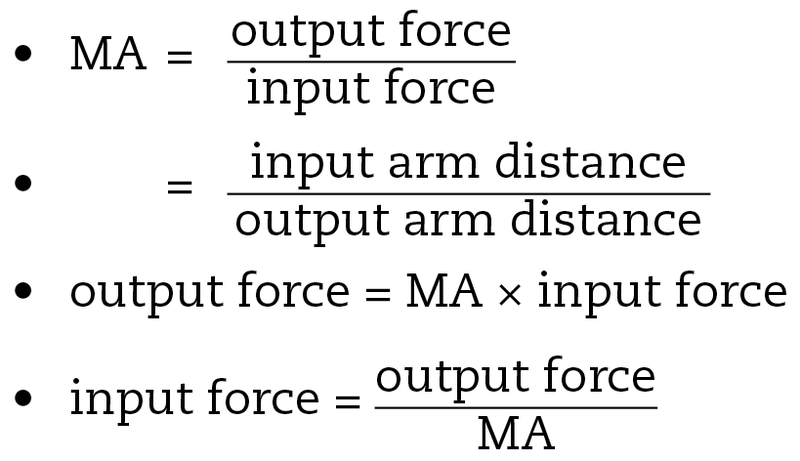
o   What is mechanical advantage?
o   What is mechanical efficiency?
·         Types of Machines
o   What are the classes of levers?
o   What is a wheel and axle?
o   What are types of pulleys?
o   What are inclined planes?
What are wedges? What are screws?


Mechanical Advantage


Monday, February 13, 2017

4th Six Weeks (Wk 6) Common Assessment Week


Common Assessment Dates:

Tuesday: 6th Grade Reading & 6th Grade Science

Wednesday: 6th Grade Math & 6th Grade Writing

Thursday: 6th Grade History


Friday Tentative

Introduction to Simple Machines: 

Simple Machines

·         Machines
o   What do simple machines do?
o   What is mechanical advantage?
o   What is mechanical efficiency?
·         Types of Machines
o   What are the classes of levers?
o   What is a wheel and axle?
o   What are types of pulleys?
o   What are inclined planes?
What are wedges? What are screws?


Monday, February 6, 2017

4th Six Weeks (Wk 5) Motion & Forces Review & Assessment


Newton's 3 Laws of Motion Explained

Review:  


  Tuesday:  Assessment will be Wednesday


·        
Motion & Speed Review
o   How are distance, time, and speed related?
·         Acceleration Review
o   How does motion change?

·         Forces
o   How do Forces affect motion?


Friday:

Simple Machines

·         Machines
o   What do simple machines do?
o   What is mechanical advantage?
o   What is mechanical efficiency?
·         Types of Machines
o   What are the classes of levers?
o   What is a wheel and axle?
o   What are types of pulleys?
o   What are inclined planes?
What are wedges? What are screws?